
Alright, let's transform this section. I'll focus on giving it a more personal, "in-the-trenches" feel, like it's coming from someone who has actually built and grown a membership site themselves.
Here’s the rewritten version:
Building a membership site isn't just a four-step process of planning, building, creating, and launching. The real magic, the part that separates a thriving community from a digital ghost town, happens long before you even think about what platform to use. It all starts with your blueprint.
Your Blueprint for a Successful Membership Site
I've seen so many entrepreneurs get excited about the tech, the branding, and the content, only to have their launch fall completely flat. Why? They skipped the most important part: the planning. Think of this as the foundation of your house. If it's weak, everything you build on top of it will eventually crumble.
This blueprint phase boils down to one simple, yet crucial, question you have to answer with absolute clarity: "Why should anyone actually join this?"
If your answer is fuzzy, you're in trouble. People don't just pay for "more content." They pay for results, for a transformation, for a solution to a nagging problem, or for a real sense of belonging. Your job is to make that value so obvious that hitting the 'subscribe' button feels like a no-brainer for your ideal person.
Pinpoint Your Unique Value and Ideal Member
First things first, you have to get laser-focused on who you're serving. A generic "membership for entrepreneurs" is a surefire way to get lost in the noise. You need a niche.
Are you helping freelance copywriters land their first big-money retainer? Or maybe you're building a community for Etsy sellers who want to master product photography with their smartphone? The more specific you get, the easier everything else becomes—from creating content they’ll actually use to writing marketing copy that speaks directly to them.
Once you know who, you need to dig into their world. What's keeping them up at night? What's the one roadblock that's constantly tripping them up? Your membership site's entire reason for being should be to solve that exact problem.
Let’s make this real. Compare these two ideas:
- Broad Idea: A membership for people who want to cook at home.
- Specific Idea: A membership for busy parents who need to get healthy, 30-minute meals on the table without tracking down a bunch of weird ingredients.
See the difference? The second one instantly paints a picture. You know exactly who it's for and the specific value they're going to get.
Validate Your Idea Before You Build Anything
This is a big one. Probably the costliest mistake I see creators make is disappearing for six months to build the "perfect" membership site, only to launch to the sound of crickets. They assumed people wanted what they were building, but they never actually proved it.
Validation is your insurance policy. It protects you from wasting a massive amount of time, energy, and money building something nobody is willing to pay for.
Don't mistake friendly compliments for validation. You're not looking for people to say, "That's a nice idea!" You're looking for proof that they'll pull out their credit card for the solution you're promising.
So, how do you do that without building the whole thing? It's easier than you think.
- Survey Your Audience: Don't just ask what they want. Ask them about their biggest frustrations related to your topic. What have they already tried that didn't work? Crucially, ask what they would be willing to pay for a solution.
- Run a Presale: This is my favorite method. Put up a simple landing page that clearly explains your membership concept, the benefits, and the transformation you're offering. Then, offer a special "founding member" discount to the first 10-20 people who sign up before you've built it. If you can get people to pay for the idea, you've got a winner.
- Host a Paid Workshop: Take a small piece of your core concept and teach it in a one-off paid workshop. If you can get people to show up and they walk away with a tangible result, that’s a massive green light that they'll want more.
This entire process is about removing the guesswork. If your presale flops, it's not a failure—it's incredibly valuable feedback that just saved you hundreds of hours. Now you can tweak your idea and try again.
Brainstorm Your Core Content Pillars
Okay, so you've got a validated idea and you know exactly who you're helping. Now you can start thinking about the actual content. Your content is simply the vehicle that delivers the promised transformation.
To keep yourself sane and prevent your members from feeling overwhelmed, structure everything around 3-5 core content pillars. These are the big-picture themes or topics your membership will consistently cover.
Let's go back to our "busy parent" cooking membership. The pillars might look something like this:
- Pillar 1: Weekly Meal Plans & Shopping Lists
- Pillar 2: A Library of Quick Recipe Videos (All Under 15 Minutes)
- Pillar 3: Kitchen Organization & Pantry Hacks
- Pillar 4: Monthly Live Q&A and "Cook-Along" Call
This structure does two things. First, it gives your members a clear roadmap for how to use your site and get results. Second, it makes your life as a creator so much easier. You can plan and batch-create your content pillar by pillar, ensuring you're always delivering focused, high-impact value. Nailing this planning stage is truly the most important thing you can do for the long-term health of your membership.
Choosing the Right Platform and Tech Stack
Alright, you've got your master plan. Now it's time to build the house. The technology you choose is the foundation of your entire membership business—it can either be an incredible asset that works quietly in the background or a constant, nagging headache.
This decision really boils down to two main paths: using an all-in-one platform or building your own site with WordPress. There’s no single right answer here. The best choice for you depends entirely on your budget, how comfortable you are with tech, and where you see this business going in the long run.
And this is a big decision, because the membership model is on fire right now. The industry is projected to explode from $7.9 billion in 2025 to a massive $14.3 billion by 2033. That’s a compound annual growth rate of 14.70%! You can dig into the membership platform market growth yourself, but the message is clear: getting your tech foundation right is your ticket to riding that wave.
All-in-One Platforms: The "Easy Button" Approach
Think of platforms like Podia or Kajabi as the plug-and-play solution. They’re built for creators who want to spend their time making great content, not messing with code. These services bundle everything you need—website hosting, payment processing, content delivery, even email marketing—into one neat package.
The biggest win here is simplicity. Seriously, you can have a professional-looking membership site up and running in a weekend without ever seeing a line of code. If you’re a solopreneur and speed is your friend, this is a massive advantage.
But that convenience comes with a few trade-offs. You're basically renting, not owning. That means less control over the fine details of design, features, and how it connects with other tools. Plus, transaction fees can eat into your profits, and if you ever outgrow the platform, moving your entire business can be a real pain.
WordPress + Plugins: The "Your House, Your Rules" Approach
For anyone who craves total control and ownership, a self-hosted WordPress site is the classic, time-tested route. By adding a powerhouse plugin like MemberPress, you can turn a basic WordPress blog into a full-blown, feature-rich membership machine.
The flexibility here is practically endless. You pick your own hosting, design your site exactly how you envision it with thousands of themes, and connect it to almost any other software you can think of. You own 100% of your data, and as you grow, it's often the more cost-effective option.
The catch? It comes with more responsibility. You’re the one in charge of security, updates, backups, and fixing things if they break. It’s a steeper learning curve, for sure. While modern plugins have made this way easier than it used to be, it definitely requires a more hands-on approach.
Here’s a quick head-to-head comparison to help you weigh your options.
Comparing Membership Platform Options
| Feature | All-in-One Platforms (e.g., Podia, Kajabi) | WordPress + Plugins (e.g., MemberPress) |
|---|---|---|
| Ease of Use | Excellent. Designed for non-techies. Fast setup. | Moderate. Requires some learning and setup. |
| Customization | Limited. You work within their templates and features. | Nearly Unlimited. Total control over design and functionality. |
| Upfront Cost | Low. Often just a monthly subscription fee. | Higher. You'll pay for hosting, themes, and plugins. |
| Ongoing Costs | Can be higher due to transaction fees and scaling plans. | Often lower in the long run, especially at scale. |
| Ownership | You're "renting." Moving can be difficult. | You own everything. Your data, your site, your rules. |
| Maintenance | Minimal. The platform handles security and updates. | Your responsibility. You manage all updates and security. |
So, which is for you? If you value speed and simplicity above all else, an all-in-one is a fantastic starting point. If you have a long-term vision that requires custom features and total brand control, putting in the effort with WordPress will pay off down the road.
This simple framework can also help you gut-check your priorities.
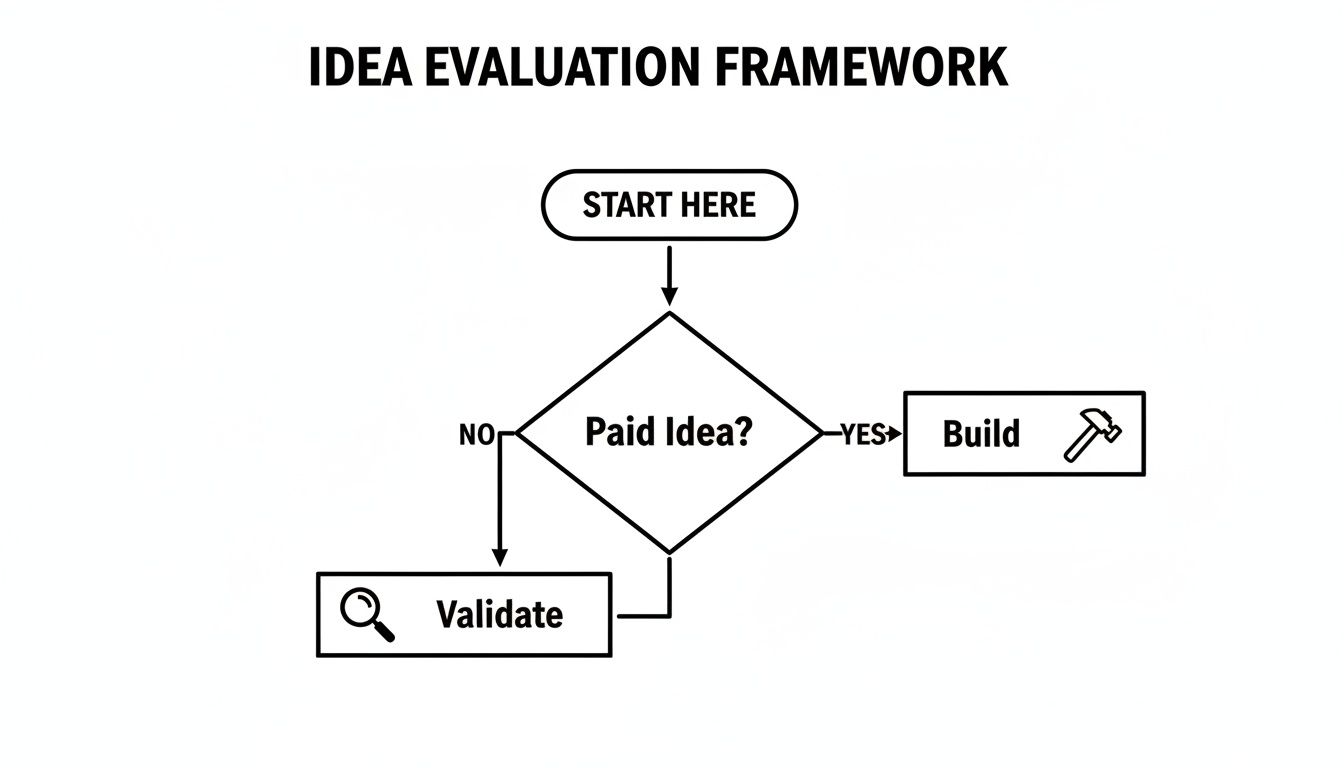
Honestly, this visual drives home a crucial point: if you haven't figured out if people will actually pay for your idea, the platform you choose doesn't matter one bit. Validate the idea first.
Putting Together Your Essential Tech Stack
No matter which platform you choose, you'll need a few other core tools to make your membership run smoothly. Think of these as the supporting cast that makes your star (the content) shine.
- Payment Gateways: This is how the money flows. Stripe and PayPal are the gold standards. They’re secure, trusted, and plug into just about everything. Just make sure your platform supports them and they operate in your country.
- Email Marketing Service: Your email list is your business's lifeline, period. You absolutely need a service like ConvertKit, ActiveCampaign, or Mailchimp to communicate with your members, send out updates, and guide new sign-ups through a welcoming onboarding sequence.
- Community Platform: A buzzing community is what keeps people from hitting the "cancel" button. While some platforms have basic forums, dedicated tools like Circle or even a private Discord server create a far more dynamic and engaging space for your members to connect.
Your tech stack should feel invisible to your members. The goal is a smooth, professional experience from sign-up to content consumption to community engagement. Every piece of technology should work together to reduce friction, not create it.
If you start browsing a review site like G2, you'll see just how many options are out there.
Seeing this wall of choices really shows why you have to start by understanding your own needs first. Are you prioritizing simplicity or control? Answering that one question will make your decision a whole lot clearer.
Crafting Your Content and Pricing Tiers

Let's be real: your content isn't just a bunch of stuff you lock behind a paywall. It's the lifeblood of your membership. It's why people sign up in the first place, and more importantly, it's what convinces them to stick around. So, let’s stop thinking about just making content and start architecting an experience they can’t resist.
First things first, how are you actually going to give people the goods? The way you deliver your content shapes the entire member experience and dictates how much of your time it’ll take.
There are a few tried-and-true models I’ve seen work wonders:
- The Drip Model: This is your go-to for any kind of structured learning, like a signature course. You release content on a set schedule—say, a new module unlocks every Monday. It’s a brilliant way to keep people from getting overwhelmed and keeps them coming back week after week.
- The "All-You-Can-Eat" Library: Think of it as a Netflix for your niche. Members get the keys to the kingdom, with instant access to every course, workshop, template, and guide you've ever created, all for one recurring fee.
- The Live-Centric Model: Here, the magic happens in real time. The main draw is the live interaction—group coaching calls, expert Q&A sessions, and workshops. The library of past recordings is a fantastic bonus, but the community and live events are the real stars of the show.
Designing Compelling Membership Tiers
Once you’ve figured out how you’ll deliver your content, it’s time to package it up. Please, don't just call your tiers "Basic," "Pro," and "Premium." That’s a massive missed opportunity. Your tier names should tell a story and paint a picture of the transformation someone can expect.
Think about the journey your ideal member is on. Imagine you're building a community for freelance writers. Instead of generic labels, you could map your tiers to their career path:
- "The Writer" Tier: This level is all about the fundamentals—building a portfolio, landing those first few clients, and sharpening core writing skills.
- "The Strategist" Tier: Here, they unlock advanced playbooks on pricing retainers, managing clients like a pro, and positioning themselves as an expert.
- "The CEO" Tier: This is the inner circle. It offers personalized coaching, a private mastermind group, and blueprints for scaling into a full-fledged agency.
See the difference? This structure doesn't just list features; it sells a clear path forward. It naturally makes members want to level up as their own careers grow.
Your pricing tiers shouldn't just be about piling on more content. They should offer different kinds of value. Often, what makes the highest tiers worth the investment is greater access—to you, to an exclusive peer group, or to personalized feedback.
Getting the Price Right
Pricing can feel like you’re just throwing numbers at a wall and hoping one sticks. But it doesn’t have to. Your price is a powerful signal about the value you're providing. My best advice? Anchor your pricing to the outcome you deliver, not the number of videos in your library.
Here are the most common structures that actually work:
Recurring Subscriptions (Monthly/Annual): This is the bedrock of a stable membership business, giving you predictable revenue. Annual plans are a game-changer for your cash flow. Offering a sweet deal like “2 months free” is a fantastic motivator for people to pay upfront, which dramatically boosts their lifetime value and commitment.
One-Time Lifetime Fee: This can be an incredible offer, especially for a founding member launch or a special promotion. It brings in a big rush of cash and rewards your earliest supporters. Just be careful with this one—you’re committing to serving these members for the long haul, so have a plan for that.
When you’re setting your price points, lean into the psychology of three. It just works. The lowest tier feels like an easy "yes," making it accessible. The highest tier becomes an aspirational goal and, by contrast, makes your middle tier look like an incredible value.
That middle tier is your sweet spot—it’s where you should put your best, most well-rounded offer, and it’s where most of your members will likely land. Nail that, and you're well on your way.
Building a Seamless Member Onboarding Experience

You’ve poured your heart into creating amazing content and nailed down your pricing. Now for the moment of truth: when a visitor decides to click that "Join Now" button. That single interaction, from the moment they sign up to their very first login, is one of the most make-or-break parts of your entire membership site.
Let’s be honest, a clunky, confusing, or unprofessional sign-up process is a massive conversion killer. Even worse, it can trigger instant buyer's remorse. The goal here is to make this transition so buttery-smooth and welcoming that your new member feels genuinely excited and confident about their decision. This all comes down to setting up a rock-solid payment system, making sure your content is properly protected, and then guiding them with a thoughtful onboarding sequence. Getting this right is your best defense against those dreaded early cancellations.
Secure Your Payments and Content
First things first, before you can welcome anyone, you need a secure way to handle payments and protect all that hard work. This isn't just a "nice to have"; it's a non-negotiable step in building a membership site that people actually trust with their credit card info.
Your first move is to integrate a payment gateway like Stripe or PayPal with your platform. Think of this as the engine that securely processes all transactions. Most modern membership platforms, whether it's MemberPress for WordPress or an all-in-one solution like Podia, have incredibly straightforward integrations you can get running in just a few minutes. The key is picking a gateway that's widely trusted and dead simple for your members to use.
Next up, you have to configure your content protection rules. This is the behind-the-scenes magic that tells your site which members get to see what. You’ll set up rules that basically say, "Hey, only members with the 'Strategist' tier can access these specific pages, courses, or downloads." This ensures every member tier sees exactly what they paid for, which is the foundation of a true premium experience.
Your member's first financial interaction with you sets the tone for the entire relationship. A seamless payment and instant, correct access to content builds immediate trust. Any friction here introduces doubt.
Design an Effective Onboarding Flow
Once all the technical bits are humming along, the real experience begins. Your onboarding process is your golden opportunity to make an incredible first impression, slash confusion, and guide your new members toward an immediate "win." A great flow doesn't just create a new subscriber; it creates an engaged community member from day one.
Think of yourself as their personal tour guide. Instead of just dropping them into a massive library of content and wishing them luck, you need to show them exactly where to start to get the most value, fast.
A well-designed onboarding sequence usually includes these key pieces:
- A Clean Registration Page: Keep this page simple. Seriously. Only ask for the absolute essential information needed to create their account. Ditch the clutter and any unnecessary fields.
- A Welcoming Confirmation Page: The second their payment goes through, send them to a page that enthusiastically welcomes them, confirms their access is good to go, and tells them exactly what to do next (e.g., "Success! Check your inbox for your login details!").
- A Strategic Welcome Email Sequence: This is the heart of your onboarding. Don't just fire off a single email with a login link and call it a day. You should plan a series of 3-5 automated emails that are dripped out over their first week.
The Perfect Welcome Email Sequence
That welcome email sequence is your automated tour guide, working for you 24/7. It should feel personal, be genuinely helpful, and get your members oriented and engaged right away.
Here’s a simple but incredibly effective sequence you can adapt for your own site:
- Email 1 (Immediate): The Welcome & Login: This one needs to arrive instantly. It must contain their login details and have one, and only one, clear call to action: log in and get started. It’s a great idea to link them directly to a "Start Here" page or a quick orientation video.
- Email 2 (Day 2): The First Win: Nudge them toward a specific, high-value piece of content that can give them a quick result. This could be your most popular worksheet, a foundational video lesson, or an invitation to introduce themselves in the community. The goal is to help them feel productive and successful right away.
- Email 3 (Day 4): Community & Connection: Now, shift the focus to the people. Encourage them to pop into the forum or Slack channel, share a bit about themselves, and maybe highlight an upcoming live Q&A call.
- Email 4 (Day 7): Check-In & Feedback: A simple, personal-sounding email asking how they're getting on and if they have any questions is pure gold. It shows you care, and it helps you gather priceless feedback from a fresh set of eyes.
This automated system ensures every single new member gets a consistent, supportive welcome, making them feel like they've truly joined something special.
Launching and Growing Your Community
Getting your membership site live is a huge milestone, but let’s be real—it’s the starting line, not the finish. The real work, and honestly, the most rewarding part, starts right now. A killer launch builds momentum, but a solid plan for growth and retention is what turns your great idea into a lasting business.
Think of this as your playbook for a powerful launch and for keeping your members happy and engaged for the long haul. The energy you build in these first few weeks can carry you for months, so let's make it count.
Crafting a Buzz-Worthy Launch Strategy
A great launch isn’t an accident; it’s a carefully orchestrated event. The goal is to build so much anticipation that your ideal members are practically refreshing their screens, waiting for you to open the doors. This means your marketing needs to kick off long before you're ready to sell anything.
Your pre-launch is all about stoking excitement and building a waitlist. Share some behind-the-scenes glimpses of what you're creating. Tease the value you're about to drop. Talk about the transformation your members are going to experience.
To make your launch absolutely irresistible, try a few of these moves:
- Roll out compelling early-bird offers. You have to reward your first believers. This could be a steep lifetime discount for the first 50 members, a special "Founding Member" badge they can show off, or bonus content that disappears forever after launch.
- Team up with partners. Who already has the ear of your ideal audience? Collaborate with them on a webinar, write a guest post for their blog, or do a social media takeover. It’s one of the fastest ways to get in front of new people and borrow some of their hard-earned trust.
- Create a little scarcity. Limited-time offers or a cap on the number of founding member spots can work wonders. People are wired to act when they feel like a good opportunity is about to slip away.
Shifting Focus to Engagement and Retention
Once the confetti from your launch settles, your main job title changes from "recruiter" to "community manager." Getting new members is a thrill, but keeping the ones you have is what creates a stable, predictable income stream. This is where you double down on creating a vibrant community and delivering non-stop value.
This isn't just a gut feeling; it’s a core principle of a healthy membership business. In fact, median renewal rates hold strong at 84% for most organizations. Even after that first year, 74% of members tend to stick around, which just proves that consistent value is the name of the game. Recent studies even show that 75% of organizations boosted or maintained their retention rates by getting personal with engagement and being crystal clear about their value.
If you want to geek out on the data, you can explore the 2025 Membership Marketing Benchmarking Report findings to see exactly how the top players are keeping their members so loyal.
A thriving community is built on interaction, not just content consumption. Your role is to be the chief facilitator, sparking conversations and creating opportunities for members to connect with you and, more importantly, with each other.
Proven Tactics to Keep Your Community Thriving
So, what does fostering engagement actually look like day-to-day? It’s all about being present and intentional. You can’t just open a forum and hope for the best. You have to be the one to light the fire. Get in there, ask thoughtful questions, and make it a regular habit to celebrate member wins and help them through their challenges.
Here are a few tactics that just plain work:
- Host exclusive member-only events. Think live Q&A calls, workshops with a guest expert, or even "hot seat" coaching sessions where you focus on one member's business. These create reliable touchpoints and deliver massive value.
- Run community challenges. A 30-day challenge focused on a single, clear outcome can be an amazing way to wake up quiet members and get everyone making real progress together.
- Actively ask for—and act on—feedback. Send out regular surveys. Ask what they love, what they need more of, and what’s driving them crazy. Then, when you implement a suggestion, give a public shoutout to the member who came up with the idea.
That last one is pure gold. When members see their feedback making a real difference, they develop a sense of ownership. They're no longer just customers; they're co-creators.
Tracking the Metrics That Actually Matter
Finally, you can’t improve what you don’t measure. It’s easy to get buried in a mountain of analytics, but only a handful of metrics truly reveal the health of your membership.
Keep your eyes locked on these vital signs:
- Monthly Recurring Revenue (MRR): This is the predictable income your business generates every month. It’s your North Star for stability.
- Churn Rate: This is the percentage of members who cancel each month. Your number one job is to keep this number as close to zero as possible.
- Lifetime Value (LTV): This is the total amount of money you can expect to earn from a single member during their entire time in your community. Growing your LTV is how you build real, long-term wealth.
By keeping a close watch on these numbers, you can stop guessing and start making data-informed decisions to improve your content, strengthen your community, and build a membership that’s built to last.
Got Questions About Building Your Membership Site?
Even with a great plan, a few questions always seem to pop up when you're figuring out how to create a membership site. Let’s tackle the big ones I hear all the time—the real-world worries about money, content, tech, and keeping members from hitting that "cancel" button. Getting these sorted will give you the confidence to push forward.
What’s This Going to Cost Me?
Honestly, you can get started for less than a hundred bucks or spend several hundred a month. It all depends on the route you take, and there’s an option for pretty much every budget.
- All-in-One Platforms: Something like Podia often has a plan around $39/month. That one fee usually covers everything—hosting, payments, and all the essential tools—in a single, predictable package.
- Self-Hosted WordPress: If you go this way, you're piecing things together. You'll need web hosting (think $20-$40/month), a domain name ($15/year or so), and a solid membership plugin. A popular one like MemberPress might run you about $179/year.
My best advice? Start lean. You don't need all the fancy features on day one. Pick a setup that fits your budget right now, and you can always reinvest in more powerful tools as your membership income starts rolling in.
What Kind of Content Should I Create?
The "best" content is whatever actually helps your members get the result you promised them. It’s not about the format; it's about the transformation. You’re there to give them the resources that solve a real problem or help them achieve a specific goal.
Don’t fall into the trap of thinking you need to create a massive library of every type of content imaginable. Just focus on one or two core formats you can deliver consistently and that your audience genuinely enjoys.
The real secret is consistent, ongoing value. A simple monthly Q&A call and a new downloadable template can be way more valuable than a mountain of videos that nobody has time to watch.
For example, a membership for photographers could be built around video tutorials and new Lightroom presets. On the other hand, a group for aspiring authors might get more value from a private community forum and live writing workshops.
Do I Need to Be a Tech Whiz to Pull This Off?
No, you absolutely do not. This is probably the biggest myth that holds people back. Modern tools have made building a membership site easier than ever, taking the focus off coding and putting it back where it belongs: on your expertise.
All-in-one platforms are built for creators, not developers. They use simple drag-and-drop editors and walk you through the setup, so there’s no technical guesswork.
Even the WordPress path isn't the beast it used to be. Plugins like MemberPress have setup wizards that guide you through every step. A little familiarity with the WordPress dashboard helps, for sure, but you definitely don’t need to know any code. Your members are paying for what you know, not for your web development skills.
How Do I Stop Members from Leaving?
Keeping people around comes down to two simple things: delivering continuous value and building a real community. When a member is getting results and feels like they belong, they’re not going anywhere.
- Nail Your Onboarding: Your welcome sequence is critical. Guide new members to a quick, early "win"—help them achieve something small but meaningful in their first week.
- Be Present in the Community: Don't just set it and forget it. Start conversations, answer questions, and celebrate your members' successes. Let them know you're there.
- Keep It Fresh: Avoid letting things get stale. Add new workshops, resources, or events on a predictable schedule so people always have something to look forward to.
- Actually Listen to Feedback: Ask your members what they need and what they love. When they feel heard and see their ideas come to life, they become way more invested.
When members feel like they're part of something special and are making real progress, that monthly subscription fee becomes a no-brainer.
Ready to turn your expertise into a thriving remote business? At Remotepreneur, we provide the playbooks, founder stories, and step-by-step guides you need to build a successful membership site from anywhere. Explore proven paths to growth.
